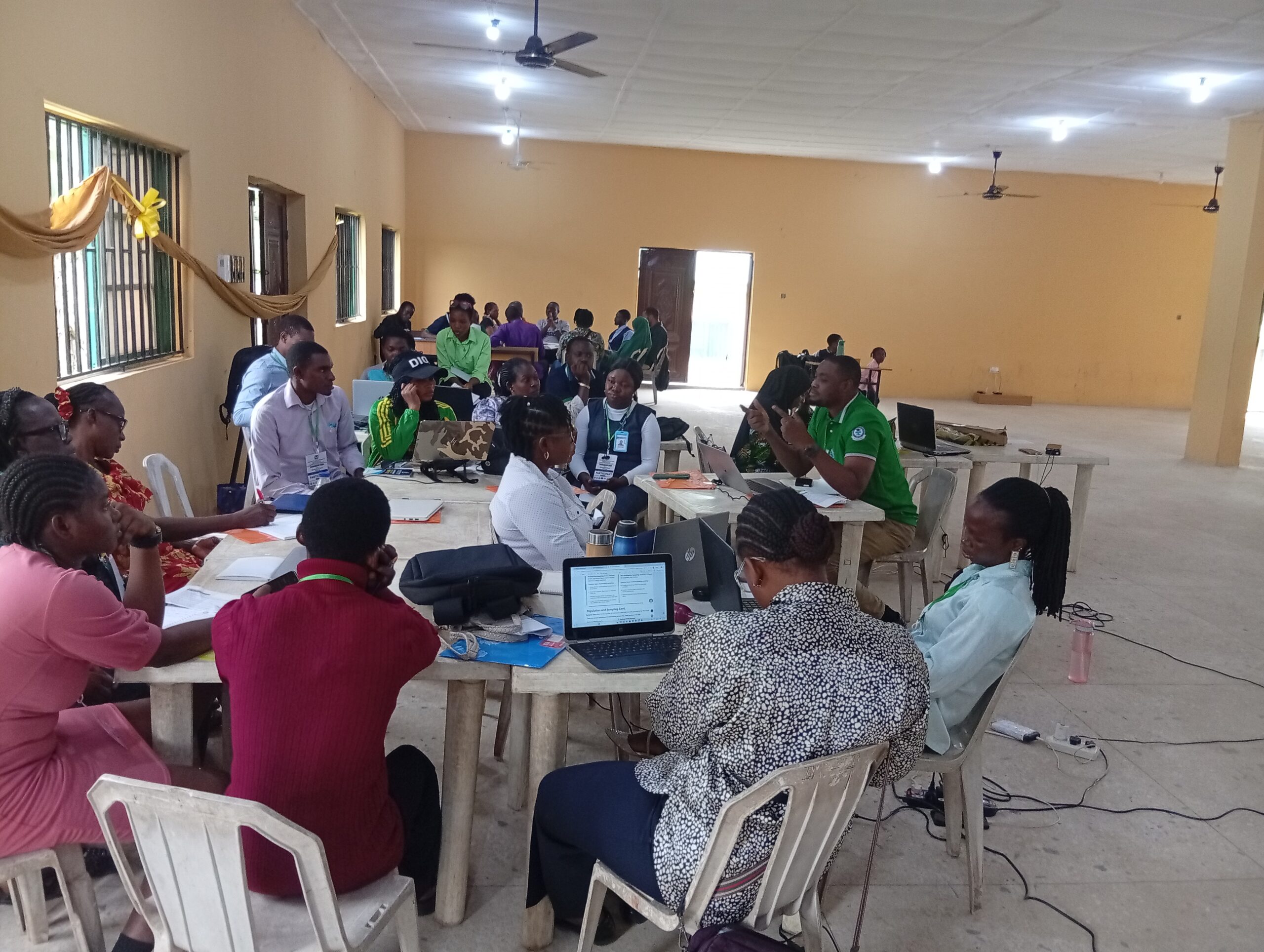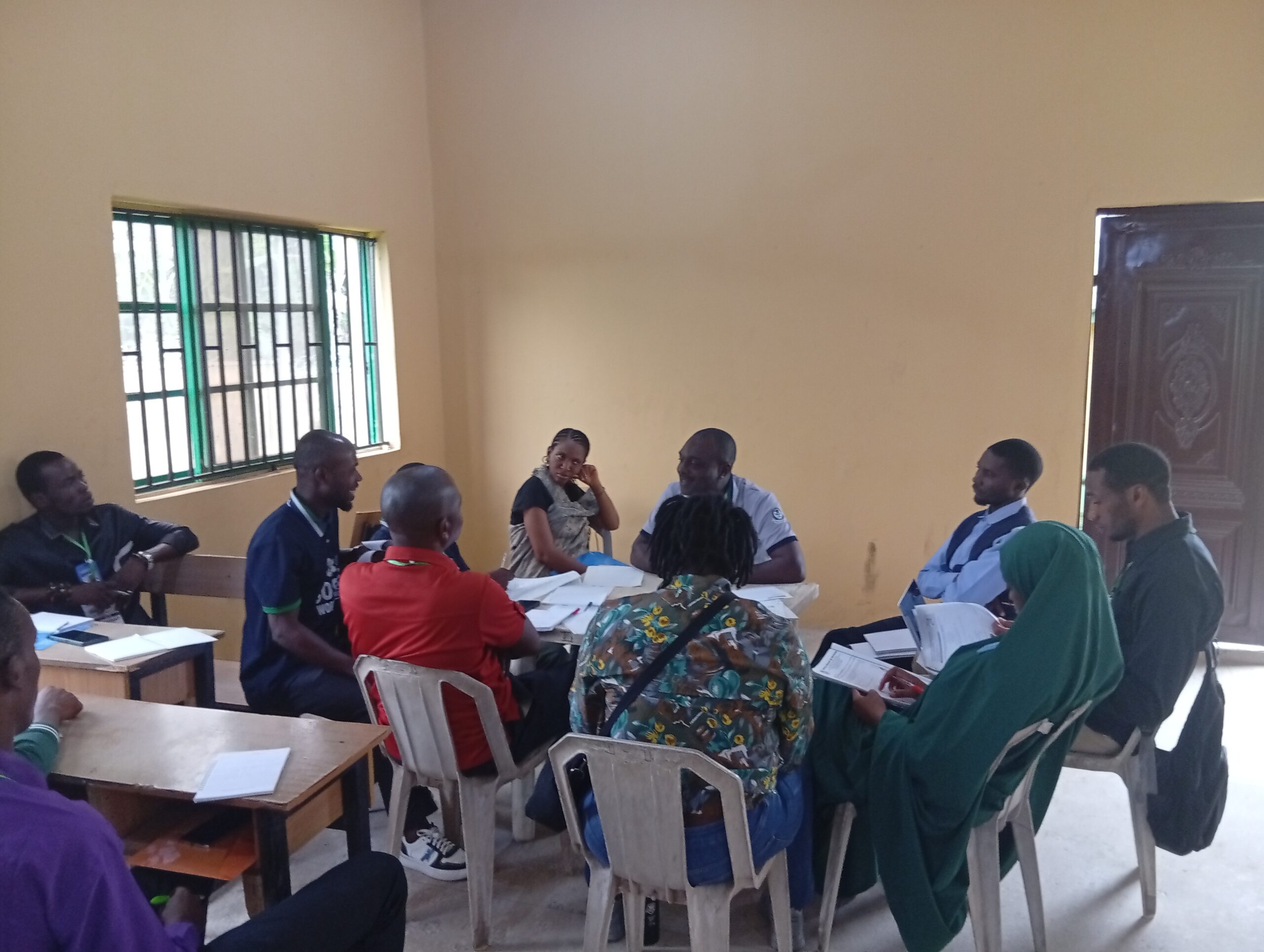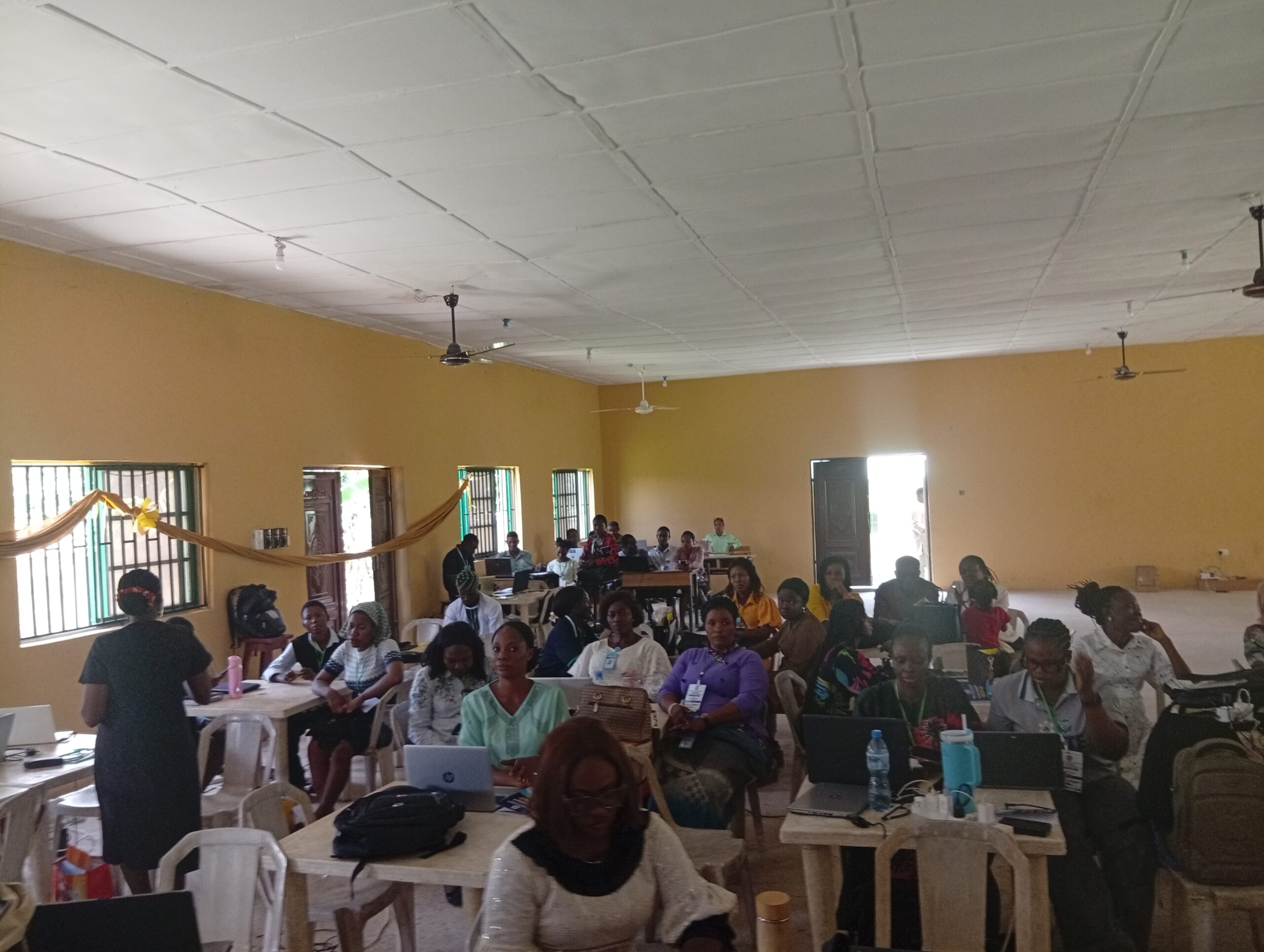
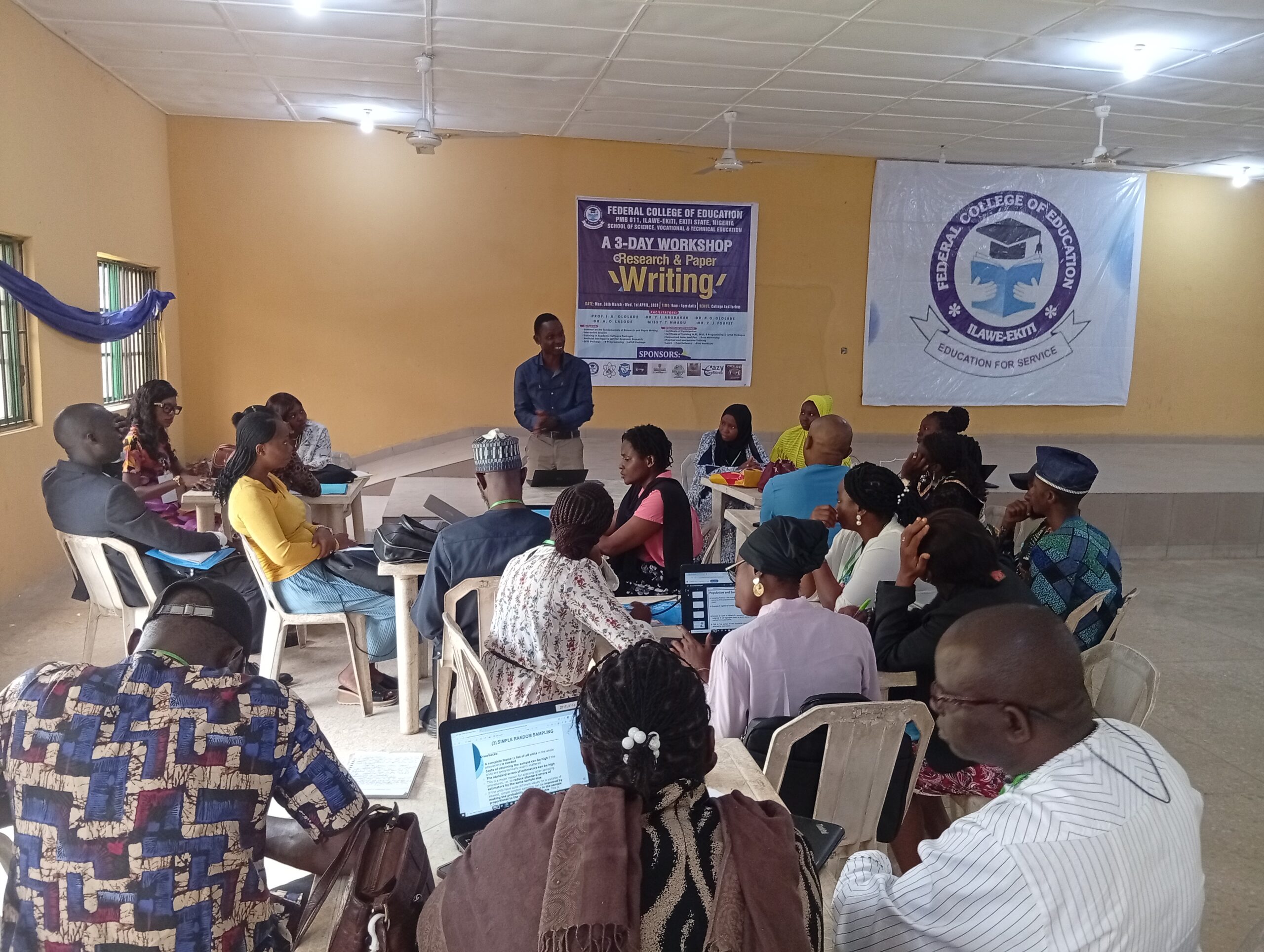
The second day of the ongoing three-day workshop on Research and Paper Writing was held on Tuesday, 31st March 2026, featuring intensive practical sessions, group-based learning, and hands-on training in modern research tools. The day’s activities were structured to deepen participants’ understanding of research methodologies while equipping them with relevant technological skills for academic excellence.
The programme commenced at 9:00 a.m. with the arrival of participants, registration, and mentorship interactions, followed by an opening prayer and introduction of guests. The highlight of the morning session was a comprehensive group seminar titled “The Nature and Style of Research and Paper Writing: A Practical Approach to Selected Fields of Study.” Participants were divided into specialized groups to address discipline-specific research approaches.
Group 1, facilitated by Drs. P. O. Ololade and Y. I. Abubakar, focused on field and laboratory experiments as well as data analysis techniques. Group 2, led by Dr. Akin, examined research practices within the education discipline, while Group 3, under the guidance of Dr. A. O. Lasode, explored numeration and pure science research methodologies. These sessions provided participants with tailored insights relevant to their respective academic fields, encouraging interactive discussions and practical engagement.
Following the group seminars, the workshop transitioned into a highly anticipated training session on the use of Artificial Intelligence (AI) tools in academic research. Mr. Z. J. Forpet facilitated both Part I and Part II of the training, where participants were introduced to emerging AI technologies that can enhance literature review, data organization, and academic writing efficiency. The session was particularly impactful, as it addressed contemporary trends in research and the integration of digital tools in scholarly work.